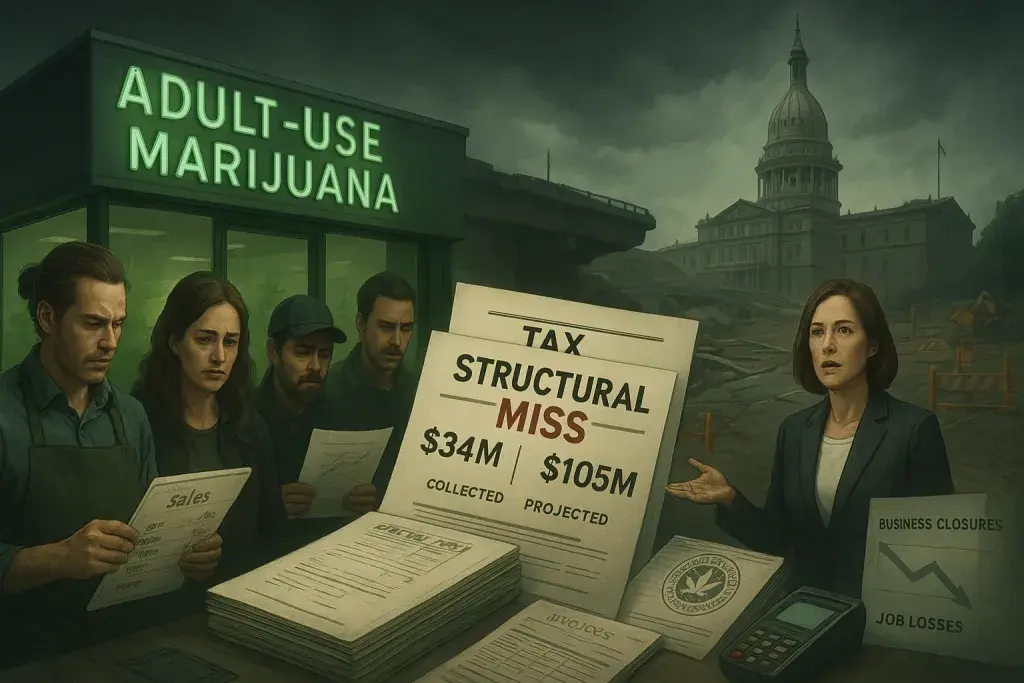
Michigan's new 24% wholesale tax on adult-use marijuana collected roughly $34 million through April 30 - the first four months of collections since the levy took effect January 1 - against a quarterly projection of approximately $105 million. That's not a rounding error. It's a structural miss that puts the state's road-funding plan on shaky ground before the fiscal year is even halfway done.
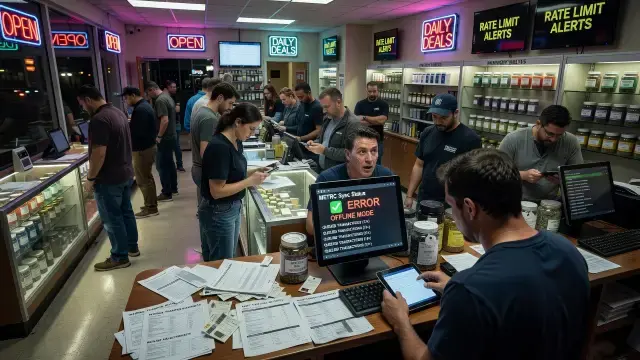
The shortfall lands hardest on the licensed cannabis operators who warned this would happen. The wholesale tax was stacked on top of Michigan's existing 10% retail excise tax and 6% sales tax, creating a combined tax burden that the Michigan Cannabis Industry Association argued would squeeze legal dispensaries and push price-sensitive consumers toward unlicensed sellers. Other regulated cannabis markets have dealt with similar pressures - point-of-sale infrastructure investments, like those tracked by platforms offering cannabis pos maryland coverage, often reflect how operators in high-tax states try to manage compliance costs and retain customers in the face of competing illicit options. Michigan's early collections suggest the industry's warnings carried more weight than lawmakers credited them.
State financial records reviewed by the State Budget Office show adult-use marijuana sales reported to the Cannabis Regulatory Agency came in below year-ago levels for each of the first four months of 2026. That's not just a slow start. Declining year-over-year sales in a market that has been operating since 2019 signals something more than seasonal variance. Wholesale pricing in legal cannabis markets tends to fall over time as cultivation capacity expands, so a 24% tax applied to a declining wholesale price base produces a compounding revenue problem - the tax rate may be fixed, but the taxable value shrinks.
How the Tax Works - and Why the Math Is Difficult
The wholesale tax applies at the point of transfer from cultivator or processor to retailer, before the product reaches a dispensary's sales floor. That structure places the initial tax burden on growers and processors, but in practice, those costs move downstream. Dispensary operators absorb margin compression when wholesale suppliers raise transfer prices to offset their tax liability, or they accept thinner margins on product they're already selling at retail prices the market will bear. Either way, the budroom feels it.
The nonpartisan House Fiscal Agency had estimated the tax would generate roughly $420 million annually when the Legislature approved it in October. The January 2026 consensus revenue estimate revised that figure to $315 million for the current fiscal year - a lower bar, partly because the tax didn't start until January 1. Even measured against that reduced target, $34 million through April is a significant gap. A fuller accounting won't be available until additional quarterly payments are filed and transition-year relief for some operators expires.
The Industry Said So - and Has the Lawsuit to Prove It
The Michigan Cannabis Industry Association didn't just lobby against the tax; it sued to block it. The legal argument: the Legislature amended the 2018 voter-approved marijuana legalization law without the three-fourths supermajority the state constitution requires for such changes. A Court of Claims judge declined in December to issue a preliminary injunction while the case proceeds. The association appealed, and the case is headed to trial.
That legal overhang matters for operators making capital decisions right now. Dispensary owners and wholesalers operating under the tax don't know yet whether it survives judicial review. Planning inventory purchases, negotiating wholesale contracts, or investing in retail technology gets harder when the tax structure itself is in litigation. "Our elected leaders made the cannabis industry a sacrificial lamb," Robin Schneider, the association's executive director, said after the revenue figures emerged. She cited business closures, job losses, and diverted tax revenue from local governments as the tangible results.
What Operators and Investors Should Watch
The revenue miss has real consequences beyond the balance sheets of individual dispensaries. The wholesale tax was the centerpiece of a bipartisan agreement meant to fund local roads and bridges through a new Neighborhood Road Fund. If collections continue to trail projections, those infrastructure commitments face a gap - and there's no obvious backstop in the current deal. That creates political pressure, which could produce further legislative action affecting the cannabis industry in either direction.
A heavily redacted memo from the state's Cannabis Regulatory Agency - sent more than a year before the tax passed - reportedly addressed the repercussions of a cannabis wholesale tax. The Department of Licensing and Regulatory Affairs has refused to release the full document; a deputy director upheld that decision as recently as April. What's striking here is the pattern: regulators appear to have anticipated the problem, documented their concerns, and watched lawmakers proceed anyway. Whether that memo resurfaces in litigation or legislative review remains to be seen.
For now, Michigan's licensed operators are running their businesses in a market with declining sales, a layered tax structure that compresses margins at every stage of the supply chain, and a court case that hasn't been resolved. The road-funding promise was sold as a long-term fix. Four months in, it looks considerably less fixed.