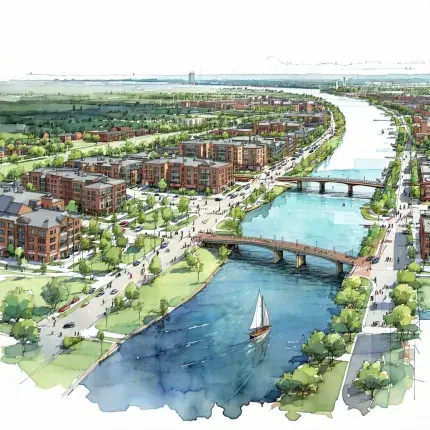
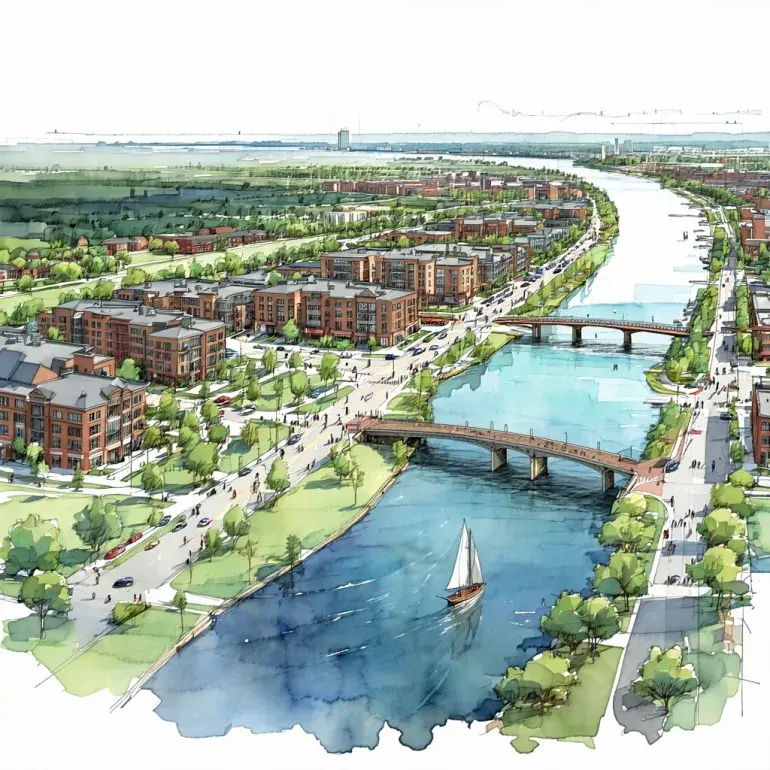
In Augusta, Georgia, the Augusta 2035 Plan emerged Tuesday as a bold 10-year blueprint, uniting downtown Augusta and North Augusta across the Savannah River to evolve their event-focused riverfront into a vibrant, residential hub aiming for 8,000 new residents by 2035. Presented by Augusta Tomorrow to the Augusta Commission, this resident-driven vision promises walkability, expanded greenspaces, and reduced parking reliance—addressing urban stagnation and fostering everyday livability in a post-pandemic era craving connected neighborhoods.
The Vision: From Events to Everyday Living
Crafted with input from residents, businesses, and both city governments, the plan treats Augusta and North Augusta as a single urban corridor, countering decades of siloed development. Urban planners know that event-driven destinations often falter without residential anchors; this blueprint flips that script by prioritizing "live-work-play" dynamics. By 2035, it targets denser, pedestrian-friendly zones that boost local economies through daily foot traffic rather than sporadic crowds, mirroring successful revitalizations in cities like Chattanooga and Greenville.
Four Anchor Initiatives Driving Change
The plan hinges on interconnected projects to knit the riverfront fabric:
- 5-Minute Downtown: Compact neighborhoods with pedestrian redesigns like expanding Augusta Common to the river and turning Jones Alley into a plaza, ensuring services and amenities within a short walk.
- Green Ribbon: A five-mile trail loop, starting with the Woodland Trail linking North Augusta's Greeneway to Augusta via Freedom Bridge, promoting cross-river trails and development.
- Rippled Edge: Revamped riverfront featuring floating piers, water taxis, plazas, and a zipline park—plus innovative "bargelets" as mobile cafes and cultural spots—to activate the water daily.
- Canopy Network: Planting 200,000 trees, creating pocket parks, and greening parking lots, strategically targeting heat islands and redevelopment sites for health and aesthetic gains.
A savvy parking strategy optimizes existing lots, gradually curbing surface sprawl—a nod to evidence showing green spaces reduce urban heat by up to 10 degrees and enhance mental health.
Collaboration, Approval, and Future Horizons
Lauren Dallas, Augusta Tomorrow's executive director, emphasized early North Augusta involvement, yielding quick commission support: a 4-0 vote to advance. Yet success demands public-private partnerships beyond taxes, echoing how downtown stakeholders funded past wins like Westobou Crossing. Implications ripple wide: denser greenspaces combat climate vulnerabilities, walkability curbs car dependency (potentially cutting emissions 20-30% per urban studies), and unified corridors could position the region as a Southern model for resilient, inclusive growth amid national trends toward 15-minute cities.
This isn't just a plan—it's a catalyst for Augusta to thrive as a lived-in gem, where riverfronts pulse with residents, not just visitors.