
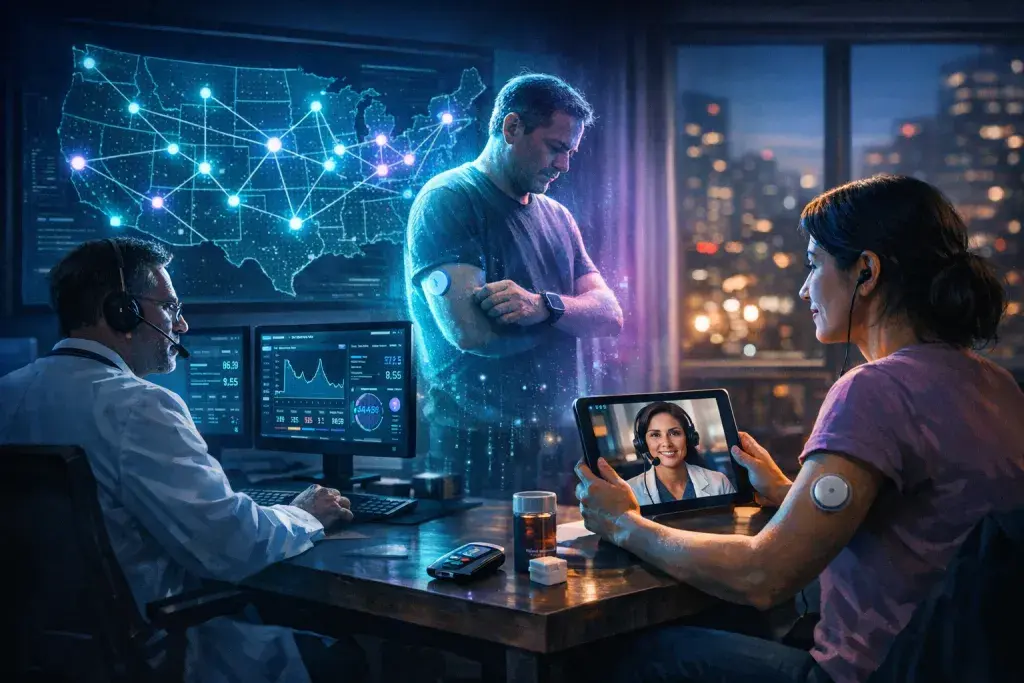
Two healthcare companies, CCS and SweetSpot, announced a strategic partnership to deliver remote diabetes management to patients across select U.S. markets. The collaboration launches a pilot program in early 2026 targeting endocrinology clinics, aiming to bridge gaps in care between office visits. With diabetes affecting more than 40 million Americans, this initiative seeks to improve outcomes through continuous monitoring and virtual support.
Filling the Void in Ongoing Diabetes Management
Diabetes demands constant attention, yet most clinical practices struggle to track patients after appointments. Tony Vahedian, CEO of CCS, highlighted this challenge: “Diabetes care doesn’t stop when patients leave the clinic, but most practices lack the tools and bandwidth to proactively monitor who needs help and take action between in-office visits.” CCS, known for clinical solutions and home-delivered supplies for chronic conditions, pairs its provider networks with SweetSpot’s remote tools. SweetSpot supplies continuous glucose data analysis, personalized feedback, and a team of Certified Diabetes Care and Education Specialists who act as an extension of physicians’ offices.
Integrating Remote Tools into Clinical Workflows
The pilot embeds SweetSpot’s monitoring directly into existing practices, allowing clinicians to spot issues early and reinforce adherence without added workload. Stephen Von Rump, CEO of SweetSpot, explained the value: “SweetSpot empowers providers to give patients better care and continuous support in a scalable way. Partnering with CCS allows us to deliver even greater impact and address one of the biggest gaps in chronic disease management: what happens between appointments.” This setup contrasts with traditional models, where patients often manage alone until the next visit, risking complications like unstable blood sugar levels.
A Shift Toward Comprehensive Chronic Care
For CCS, the partnership marks a pivot from supplying medical products to offering full-spectrum chronic care services. Providers gain holistic remote oversight, which supports preventive strategies amid rising diabetes prevalence driven by factors such as aging populations and lifestyle influences. Early identification of problems can prevent hospitalizations, a common burden for diabetes patients. As remote care technologies mature, such programs point to a broader trend: health systems adapting to deliver proactive, clinic-independent support that aligns with patients’ daily lives.