
A Sunnyside dispensary backed by Chicago-based multi-state operator Cresco Labs is set to open at 435 Main Street in Bridgeport, Ohio within 60 to 90 days, converting a former bank building into a licensed adult-use and medical cannabis retail outlet. The opening reflects Ohio's post-legalization buildout - both recreational and medicinal cannabis are now legal in the state - and it puts Bridgeport directly in the path of cross-border consumer traffic from West Virginia and Pennsylvania, two states where adult-use access remains more restricted. For a small Ohio Valley village, the revenue and employment implications are worth examining in some detail.
Location Strategy and the Border-Market Calculus
Cresco Labs didn't land on Bridgeport by accident. When Ohio's regulators developed a framework for siting licensed dispensaries, border proximity factored into the allocation process. Bridgeport sits within roughly a half-hour of both West Virginia and Pennsylvania - states where adult-use cannabis either remains prohibited or is less accessible than in Ohio. That geographic position creates a meaningful draw beyond the local population.
The company operates a similar dual-license location near Wintersville, Ohio, and has a presence near the Indiana border at Dayton. The pattern is clear: Cresco is positioning Sunnyside outlets at the edges of Ohio's legal market, where demand from neighboring states can supplement in-state sales. For operators running vertical integration models - where the same company touches cultivation, processing, and retail - maximizing retail throughput at high-traffic border stores makes the unit economics work harder across the entire supply chain.
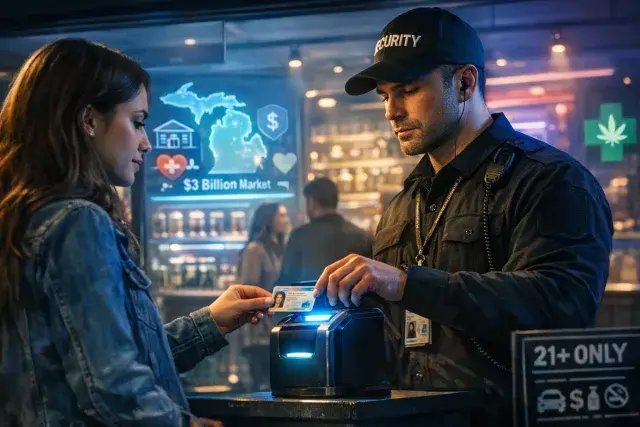
The store design reportedly mirrors an Apple retail format, with product displayed behind glass and a drive-thru lane. That's a deliberate operational choice. Drive-thru lanes at dispensaries reduce budroom congestion, speed transaction times at the point-of-sale, and have shown strong adoption in markets where consumer privacy remains a purchasing consideration. For compliance purposes, age verification and product handoff protocols at drive-thru windows require careful procedural documentation - that's not a footnote, it's a material operational cost that operators often underestimate at opening.
Jobs, Wages, and the Local Hiring Commitment
The projected headcount - 12 to 15 full-time employees and 10 to 12 part-time - isn't large by regional employment standards, but the wage structure stands out. Assistant store managers are expected to earn $28 to $29 per hour; even part-time positions are set at $16 per hour. Full-time employees will have access to health insurance and stock investment options. In a village economy, those terms carry real weight.
The local hiring commitment reportedly extends to the construction phase as well. Bridgeport Solicitor Michael Shaheen said the village made clear, at the outset of the arrangement, that it expected Cresco to source construction work and permanent staff from within the Ohio Valley. Hundreds of applications have reportedly already come in. That level of interest, before a single shift has been worked, tells you something about local economic conditions - and about how seriously a Cresco-brand dispensary license reads on a resume in this labor market.
Worth noting for operators elsewhere: this kind of explicit local-preference understanding, even when informal, is increasingly common in municipal negotiations with cannabis licensees. Communities that have approved cannabis zoning are asking harder questions about who benefits. Operators that get ahead of those conversations - rather than treating them as afterthoughts - tend to have smoother paths through the permitting and operational phases.
Tax Structure and What 3.4% Actually Means
Ohio's adult-use cannabis tax framework routes 10% of gross revenue to government in total - 6.6% to the state, 3.4% to local jurisdictions. That split is the mechanism most relevant to Bridgeport's fiscal picture. Shaheen was direct about the math: on several million dollars in annual revenue, the local portion becomes meaningful for a small municipality with limited other revenue streams.
Here's the catch, though. Dispensary revenue projections at opening are notoriously variable. First-year sales at a new adult-use location depend on competitive density, local population, cross-border draw, and how quickly the operator establishes reliable inventory. Operators dealing with wholesale supply constraints, SKU gaps, or product availability issues in the early months can see sales well below mature-market projections. The tax yield follows accordingly. Municipalities that build budget assumptions on early dispensary revenue estimates before a store has operated a full fiscal year often find themselves recalibrating.
The approximately $1 million in planned physical improvements - interior and exterior - is also a one-time economic input, not a recurring one. That's relevant for local officials framing the project's long-term economic contribution. The ongoing value is in payroll, local vendor relationships, and the tax remittance stream - not the build-out.
Compliance, Consumer Safety, and What Opening Day Actually Requires
A licensed cannabis retailer operating under Ohio's regulatory framework carries compliance obligations that don't pause during the excitement of a high-profile opening. Seed-to-sale tracking, point-of-sale system integration with state reporting requirements, compliant packaging and labeling on every SKU, age verification at every transaction, and staff training on responsible retail protocols are all pre-opening requirements - not suggestions.
For a company of Cresco's scale, those systems are mature. Sunnyside operates across multiple states, which means the SOPs, compliance logs, and inventory management infrastructure travel with the brand. Smaller independent operators opening in Ohio right now are working through the same requirements without that institutional infrastructure - a meaningful operational gap that shows up in audit exposure and staff error rates during the first 90 days.
Cannabis products sold at any licensed Ohio dispensary must meet state testing and labeling standards before they reach the sales floor. Potency, contaminants, and product composition are regulated at the production level; the retailer's responsibility is ensuring that only compliant, properly documented inventory enters the budroom and that certificates of analysis are current and accessible. That's not glamorous work. It's also not optional.
Bridgeport is getting a well-capitalized operator with an established retail brand, a functional compliance infrastructure, and a genuine wage package. For a village navigating the early years of Ohio's legal cannabis market, that combination is more useful than a flashy opening weekend. The real measure of this location's value to the community will come 18 to 24 months in - when the tax remittances are recurring, the local hires have tenure, and the initial build-out costs have been absorbed.