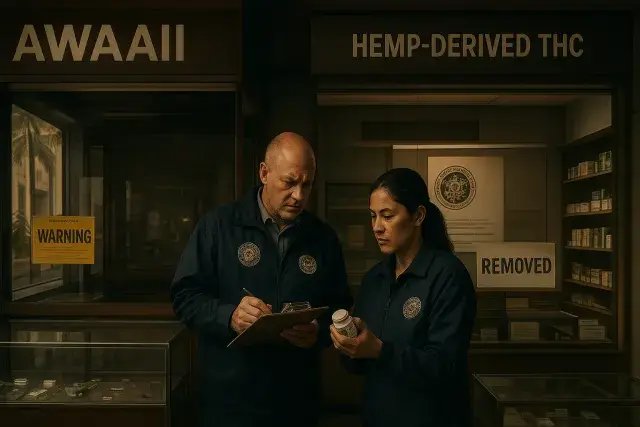
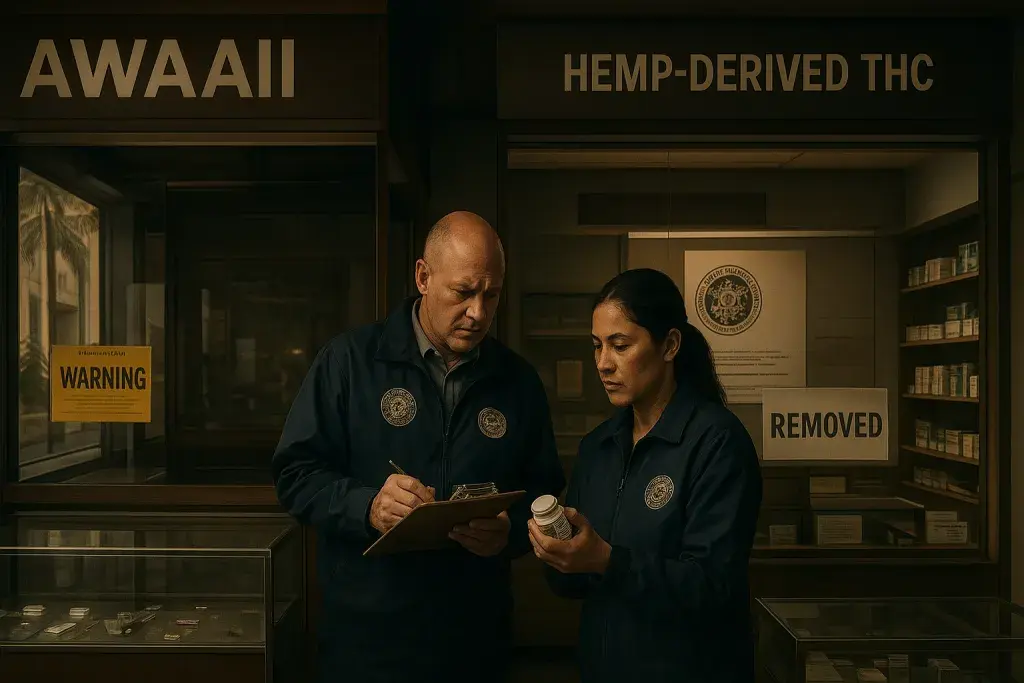
Hawaiʻi's Department of Health has moved to pull hemp-derived THC gummies, pre-rolls and drinks off retail shelves statewide, enforcing a rule that treats these federally legal hemp products as unauthorized under state law. The result: shops that once stocked a wide range of low-cost intoxicating hemp goods, from Waikīkī kiosks to Oʻahu strip-mall retailers, now face empty display cases and a state agency with fresh inspection authority. For an industry that grew fast and largely unregulated, the shift marks a hard reset - and a preview of fights likely to play out in other states as Washington closes the same federal loophole.
The mechanics matter here. Hawaiʻi's 2020 hemp law allowed cultivation but never authorized the sale of hemp-derived THC products - gummies, vapes, beverages - even though the 2018 Farm Bill's 0.3% delta-9 THC threshold let those same items move freely across state lines elsewhere. That gap let unlicensed retailers multiply, reportedly growing from a handful of Oʻahu storefronts to several dozen within roughly a year, according to figures cited by a licensed dispensary executive during legislative testimony. Act 269, passed this year, gave the Department of Health's Office of Medical Cannabis Control and Regulation a registration mandate and inspection power it previously lacked over non-dispensary sellers. For operators trying to keep pace with shifting compliance regimes across jurisdictions, the back-end infrastructure question - inventory tracking, batch records, point-of-sale reporting - increasingly resembles what multi-state and even multi-country retailers already manage; platforms built for a dispensary pos system Ontario operators rely on offer a useful comparison point for how seed-to-sale accountability gets built into daily retail operations when regulators start asking hard questions.
What's striking is how this fight splits the industry rather than uniting it. Licensed medical dispensaries - Hawaiʻi caps that pool at eight companies, each permitted multiple retail locations - lobbied hard for the crackdown, arguing unregulated hemp sellers were siphoning revenue that should flow through tested, tracked, taxed channels. Dispensary card enrollment has dropped meaningfully in recent years, a decline dispensary operators tie directly to cheaper, more accessible hemp-THC alternatives sold without a medical card. Unlicensed retailers, meanwhile, argue the enforcement amounts to protectionism dressed up as consumer safety, propping up an oligopoly rather than genuinely closing a testing or labeling gap.
Compliance Gaps That Actually Matter
Set the politics aside for a moment. The consumer-safety argument isn't baseless. Hemp-derived THC products sold outside licensed dispensary channels typically bypass the batch testing, potency verification and compliant packaging standards that state medical and adult-use programs require. A shopper buying a pre-rolled hemp cigarette off a Waikīkī kiosk shelf has no guarantee the label matches the lab result - because in many cases, there was no lab result tied to state oversight at all. That's a real gap, not a manufactured one. Whether the fix should run through existing medical dispensary infrastructure or a separate adult-use licensing track is the actual policy question, and Hawaiʻi hasn't resolved it.
A Federal Clock Now Running
The legal fight in Honolulu federal court - centered on supremacy clause and dormant commerce clause claims - may soon be overtaken by events. Congress has already moved to redefine hemp at the federal level, effectively closing the loophole that let intoxicating hemp products spread nationally in the first place. That change, delayed once already, is expected to reshape wholesale supply chains, retail menus and compliance obligations for hemp-adjacent retailers well beyond Hawaiʻi. Operators who built business models on federally legal hemp arbitrage now face a narrowing window, regardless of how the state court case resolves.