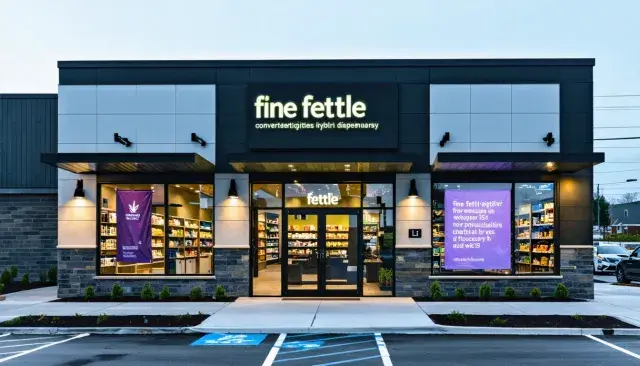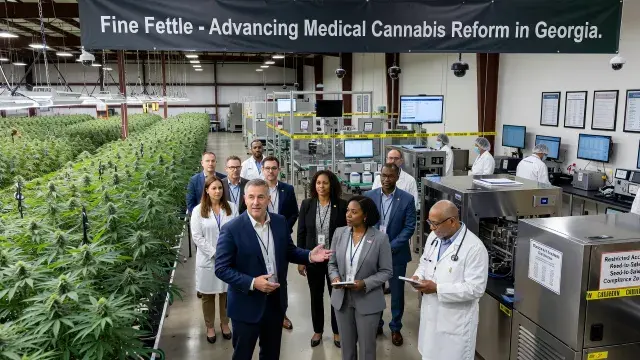
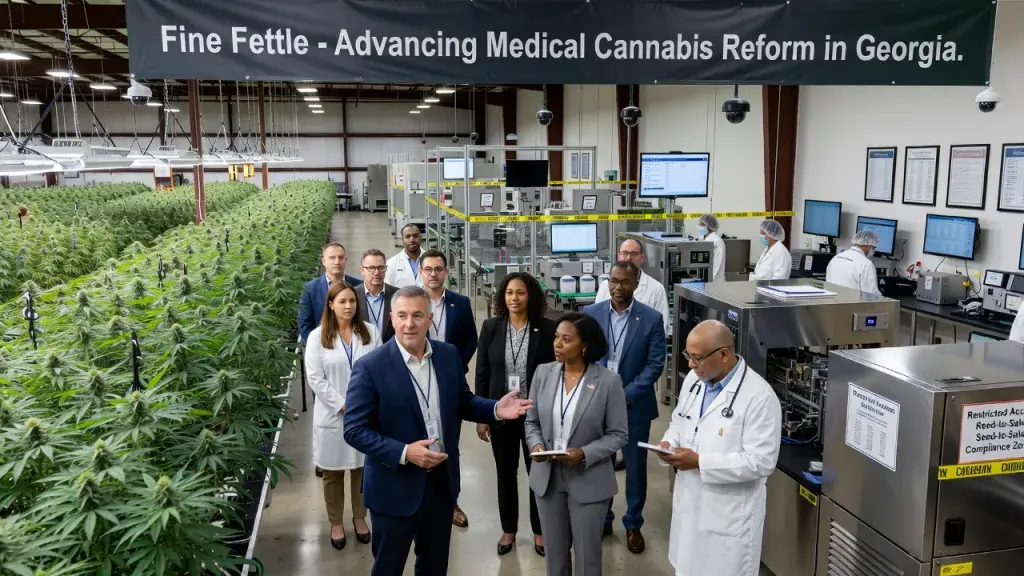
A licensed medical cannabis producer in Macon is trying a different approach to a decade-long legislative standoff: show, don't tell. Fine Fettle, one of only three companies licensed to grow, manufacture, and distribute medical cannabis products in Georgia, recently walked lawmakers, physicians, and patients through its Macon facility to demonstrate exactly how a state-sanctioned cannabis operation actually runs. The tour comes as two bills aimed at expanding the state's narrow medical program, Senate Bill 220 and House Bill 227, sit stalled after failing to clear their chambers this session.
Georgia legalized medical cannabis roughly ten years ago, but the program remains one of the most restrictive in the country. Patients need a qualifying condition and a low-THC oil registry card, and the list of approved product forms is narrow compared to states with mature adult-use or broader medical markets. That gap matters operationally: a limited product form list means limited SKUs, which means limited wholesale menus for the state's three licensed producers to work with. Compare that to how other regulated markets structure oversight, where platforms built for cannabis dispensary compliance montana operators, for instance, manage seed-to-sale tracking, inventory reconciliation, and patient verification across a far wider product catalog. Georgia's compliance framework, by contrast, is still built around a small, tightly controlled supply chain with little room for expansion without legislative action. cannabis dispensary compliance montana
Why the Bills Stalled Again
SB 220 and HB 227 would have made it easier for Georgians to obtain a medical cannabis card and updated the approved product form, changes that sound modest on paper but carry real weight for operators. Expanding product forms means new manufacturing lines, new batch testing protocols, and new packaging runs, all under the same license cap structure. That's not a small lift for a market with only three licensed producers. Every new SKU has to clear lab testing and generate a certificate of analysis before it reaches a dispensary shelf, and Georgia's compliance infrastructure was built for a narrower catalog than what patients and doctors are now asking for.
What the Facility Tour Was Really Selling
Judson Hill, market president of Georgia Fine Fettle, framed the visit as an education exercise rather than an advocacy stunt. "We just wanted to help start the conversation to educate legislators, allow doctors to share their medical point of view, and, you know, patients obviously telling their stories as well," Hill said. State Representative Anissa Jones, who joined the tour, said seeing the cultivation and manufacturing process firsthand changed how she thinks about the program's oversight. "Knowledge is power because we now get a firsthand look at what the process is and how controlled it is. It's just not folks out there just growing stuff wild in nature, and now we're able to get the same product over and over to be able to help patients," Jones said.
The Access Gap Doctors Are Flagging
Dr. Elmore Alexander, who also took part in the tour, pointed to a specific clinical problem: the current product lineup serves most patients adequately but leaves a meaningful minority without options. "We can treat properly 80% of the people with what we have, but that other 20% who are a critical population that we need to be able to reach. We need additional products. We need more choices, and we need the state to open up the cannabis program and get these products available to the patients," Alexander said. For operators, that's a compliance and manufacturing question as much as a medical one; broadening access means expanding licensed production capacity, updating lab testing standards for new formulations, and doing it all within a regulatory structure that has moved slowly for a decade. Whether lawmakers act before the next session is, at this point, an open question.