Missouri's Nov. 12 deadline to pull intoxicating hemp products from store shelves is now tangled up in Washington's budget process, and the outcome could split the state's hemp market into winners and losers depending on product category. A short-term federal funding measure passed by the Senate over the weekend would push back the federal ban on intoxicating hemp THC products until Dec. 11 - and under Missouri's own law, that federal delay triggers a narrow carve-out allowing hemp-derived THC beverages to keep selling even as edibles, tinctures and other intoxicating hemp products go dark.
That's an unusual structure for state lawmakers to have built, and it puts retailers in an odd operational position. A convenience store or bottle shop that carries THC seltzers alongside gummies would, in theory, need to keep one SKU category on the shelf while pulling another off entirely - a compliance headache for any point-of-sale system trying to flag restricted items correctly at checkout. Retailers juggling mixed hemp and traditional inventories already know how much this depends on getting the back-end tagging right; operators managing multistate footprints who rely on cannabis pos systems texas for parallel compliance builds in neighboring markets understand how quickly a single miswritten product rule can ripple through inventory logs, wholesale menus and delivery manifests.
The bill still needs House approval and a presidential signature before the delay is locked in, so nothing is final. But the Senate's 61-31 vote, described by Missouri Hemp Trade Association president Jay Patel as showing real bipartisan appetite for a federal fix, suggests Congress isn't eager to let the ban snap into place without a longer runway for regulation. Patel was careful to frame this as partial relief, not a solution - "whatever happens on the federal side, it's not going to fully solve our problems in Missouri," he said, which is a fair way to put it given the patchwork nature of the state exception.
A Narrow Carve-Out With Wide Business Consequences
Missouri Gov. Mike Kehoe signed the state ban this spring largely to mirror the federal prohibition Congress approved last year. The wrinkle is that lawmakers wrote in a conditional exception: if Washington delays its ban, everything except intoxicating beverages still disappears from Missouri shelves on schedule. That means gummies, tinctures, vapes and other hemp-derived intoxicating products face removal in November regardless of what happens in Congress - only the beverage category gets a possible reprieve.
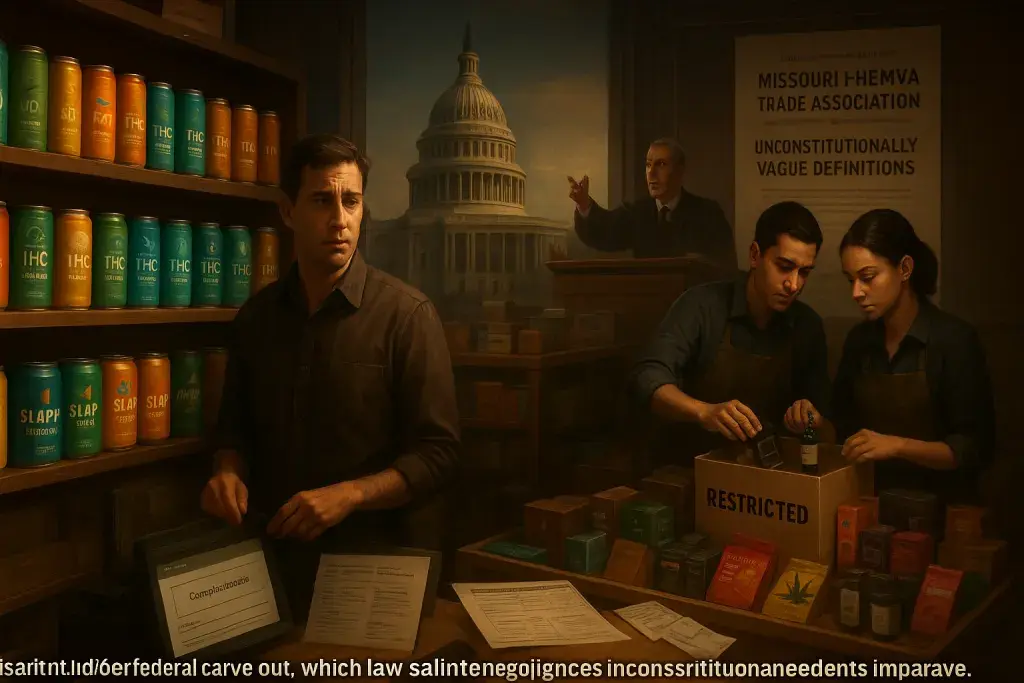
For a business like Slaphappy Hemporium in Rosebud, owned by John and Kara Grady, that split cuts two ways. The seltzers they produce could keep moving through wholesale channels into December. Everything else in their product mix - edibles included - faces the November cutoff no matter what the federal government does. "We started off as a beverage producer," Grady said, "so for us, that is a good thing, but it also hurts the whole other part of our business." That's the kind of exposure a lot of hemp operators are staring down right now: a regulatory calendar that protects one revenue stream while cutting off another.
Litigation Adds Another Layer of Uncertainty
The Missouri Hemp Trade Association and a coalition of hemp businesses filed suit last month in the U.S. District Court for the Western District of Missouri, arguing the state's ban relies on definitions of hemp and marijuana that are unconstitutionally vague. That case is separate from the federal funding fight, but it adds a second track operators are watching closely - a court ruling could reshape enforcement even if Congress finalizes its delay.
For dispensary operators, wholesalers and compliance teams, the practical takeaway is that nothing here is settled. Product batches need tracking against a moving legal target, COAs and lab testing protocols still apply, and any retailer holding hemp inventory should treat Dec. 11 as a soft deadline at best, not a guarantee. Grady and others in his network are using the delay to push for comprehensive federal rules before that date arrives - a long shot, maybe, but the alternative is another cycle of state-by-state patchwork that makes inventory planning nearly impossible.