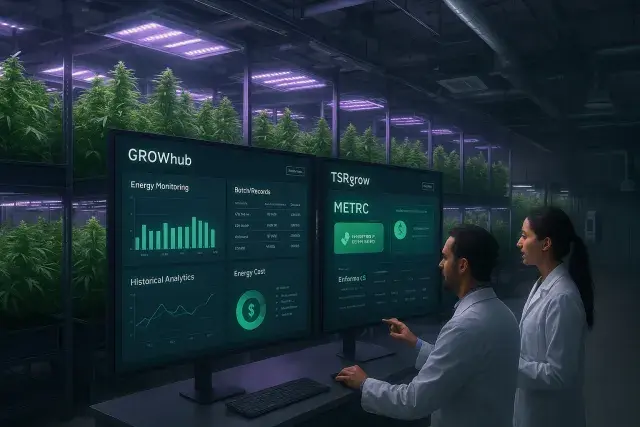
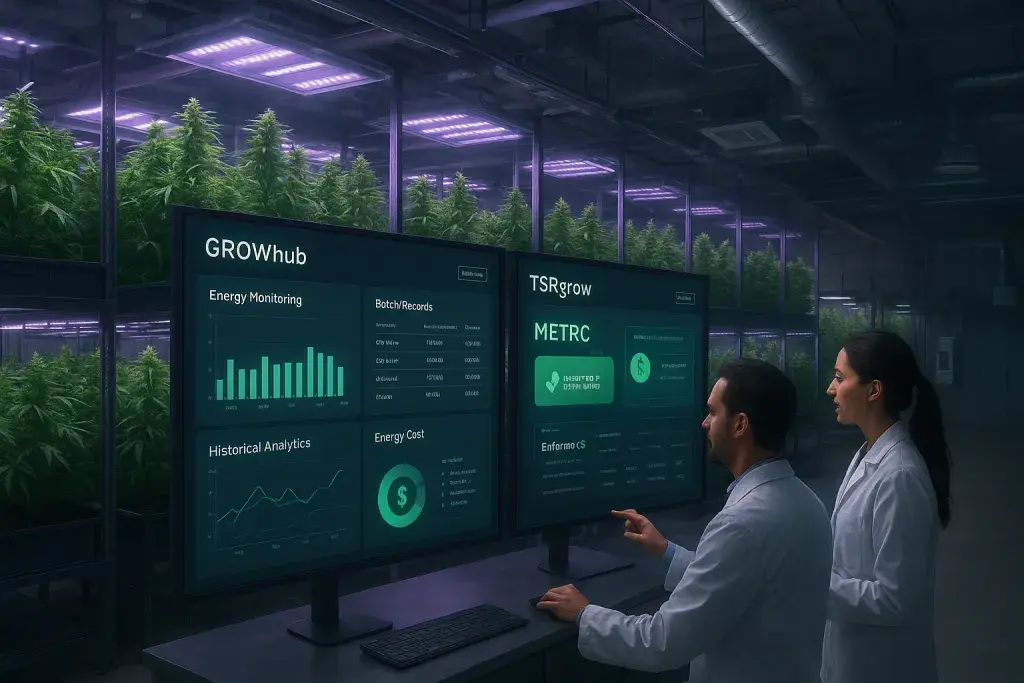
TSRgrow has rolled out a significant expansion of GROWHub, its cultivation software platform, adding energy monitoring, expanded batch-record tools, Metrc integration and Building Management System connectivity ahead of 2026. The update pushes GROWHub beyond lighting control and into something closer to a full operating layer for commercial grow facilities - one that ties crop performance, energy draw and regulatory recordkeeping into a single connected system.
For cultivators, the core problem GROWHub is trying to solve is a familiar one across regulated cannabis operations: too many systems, not enough shared data. Environmental controls, lighting schedules, energy readings and compliance logs often live in separate platforms that don't talk to each other, which forces cultivation teams to reconcile spreadsheets by hand and hope nothing falls through the cracks before an audit. That fragmentation isn't unique to cultivation, either - dispensary operators face the same headache when point-of-sale, inventory and track-and-trace systems don't sync cleanly, which is part of why markets with strict reporting rules increasingly lean on integrated platforms; retailers evaluating cannabis software for dispensaries new york have run into similar pressure to consolidate compliance workflows into fewer, more reliable systems. cannabis software for dispensaries new york
GROWHub's expanded feature set lets growers build lighting recipes by room, zone, rack or cultivar, then layer historical analytics on top to compare cycles and spot patterns in yield and consistency. That's a meaningful shift from static grow logs toward something operators can actually query and learn from.
Why Metrc Integration Matters Beyond Convenience
Batch-record expansion and Metrc integration aren't just administrative conveniences. Track-and-trace compliance is one of the more unforgiving parts of running a licensed cultivation operation - a mismatched batch record or an incomplete cultivation log can turn a routine audit into a costly problem. By linking cultivation settings and environmental data directly to the batch identifiers regulators already track, TSRgrow is betting that tighter documentation reduces manual error and gives operators a defensible paper trail. That matters more, not less, as federal rescheduling discussions continue and state regulators signal they'll keep scrutiny high rather than ease off.
Energy Data as a Business Metric, Not Just a Utility Bill
Indoor cultivation is energy-intensive, full stop. Lighting, HVAC and dehumidification represent some of the largest recurring operating costs a facility carries, and those costs land on the P&L right alongside 280E tax exposure that already squeezes margins for plant-touching businesses. Connecting Remote Power energy data with cultivation and environmental records gives operators a way to see, cycle over cycle, whether a given lighting strategy is actually paying off in yield relative to what it costs to run. BMS connectivity extends that visibility further, pulling facility-wide systems into the same data picture instead of leaving energy management as a separate conversation entirely.
What This Signals for Multi-State Operators
The broader implication here isn't really about lighting hardware. It's about consolidation. Multi-state operators managing cultivation across different regulatory regimes have limited patience for platforms that only solve one piece of the puzzle. A system that ties analytics, energy monitoring, batch records and compliance workflows together - however imperfectly in practice - reduces the number of vendors, logins and reconciliation headaches an operations team has to manage. Whether GROWHub delivers on that promise at scale will depend on execution, not marketing copy. But the direction is consistent with where regulated cannabis technology is heading: fewer disconnected tools, more unified systems built around the reality that cultivation, energy and compliance were never separate problems to begin with.