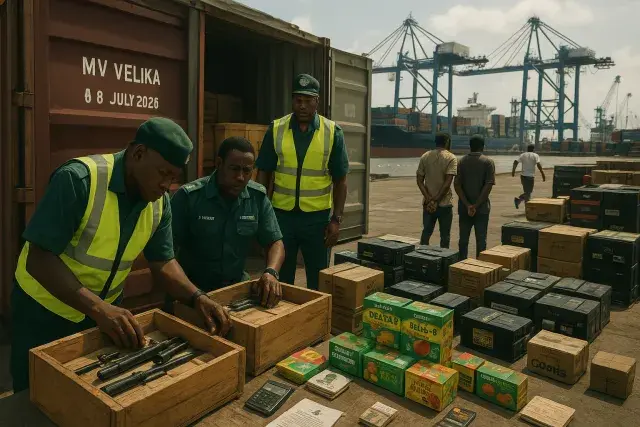
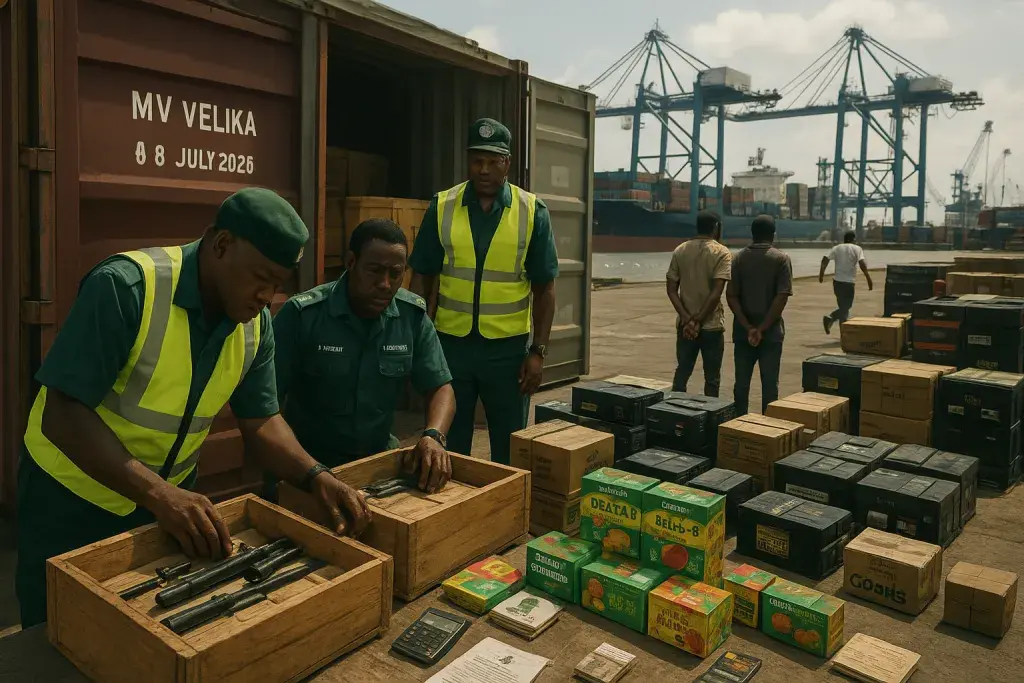
A single flagged shipping container at Tincan Island Port has surfaced two distinct smuggling operations at once: knocked-down pump-action rifle components and a cache of cannabis-infused consumer goods worth more than ₦373.8 million. The Nigeria Customs Service disclosed the seizures on Thursday, 6 August 2026, tying both interceptions to intelligence-driven risk profiling that flagged the MV VELIKA shipment for enhanced inspection after it arrived on 8 July 2026.
What's striking here is the packaging logic smugglers used - concealing crates of firearm parts and separately routing cannabis-infused cookies, gummies and pre-roll products alongside used vehicles, generators and batteries in two 40-foot containers. That's a familiar tactic in illicit trade: bury the contraband in bulk, legitimate-looking cargo and hope volume defeats scrutiny. It rarely works against a properly resourced risk-management system, but it does reveal how porous formal trade channels can become without layered oversight. In jurisdictions where cannabis retail is regulated rather than banned outright, dispensaries rely on tools like cannabis purchase-limit tracking through platforms such as cannabis purchase-limit tracking to keep inventory, sales limits and compliance logs auditable - a stark contrast to the undocumented, untested products moving through unregulated import channels in this case.
Why the Product Mix Matters for Compliance Thinking
The seized goods - Delta-8 cannabis-infused pre-roll cookies, gummies and plain cookies - total 307 cartons across three categories. In a regulated adult-use or medical cannabis market, products like these would move through seed-to-sale tracking, batch-level lab testing, and COA verification before ever reaching a shelf. None of that infrastructure exists for smuggled goods. There's no potency verification, no contaminant screening, no compliant packaging standard, and no age-gating at point of sale. For consumers, that's the real risk: not the presence of cannabis compounds themselves, but the total absence of quality control that regulated markets are built around.
Enforcement Pressure Ahead of an Election Cycle
Comptroller General Adewale Adeniyi was blunt about timing. Election cycles, he noted, tend to draw increased attempts to move weapons and contraband through ports, airports and land borders, and the Service is bracing for exactly that pattern. Two suspects tied to the firearms component were arrested; a third remains at large. Adeniyi also addressed internal risk directly, warning that Customs "will not harbour" personnel who might be pressured or bribed into facilitating illicit imports - an acknowledgment that supply-chain integrity depends as much on internal controls as border checkpoints.
Broader Implications for Trade and Retail Oversight
For operators anywhere along a legitimate cannabis supply chain - processors, distributors, retail licensees - episodes like this are a reminder of why regulatory bodies push so hard on manifest accuracy, chain-of-custody documentation and inventory reconciliation. Smuggling operations exploit exactly the gaps that compliance systems are designed to close: unverified cargo descriptions, inconsistent inspection triggers, and weak coordination between agencies. Nigeria's approach, pairing risk-based container flagging with inter-agency collaboration, mirrors tactics regulators in legal cannabis markets use to prevent diversion, though the underlying goal here is prohibition enforcement rather than licensed market integrity. Either way, the mechanism is the same: intelligence-led targeting beats blanket inspection, and it depends on data operators can't easily fake.