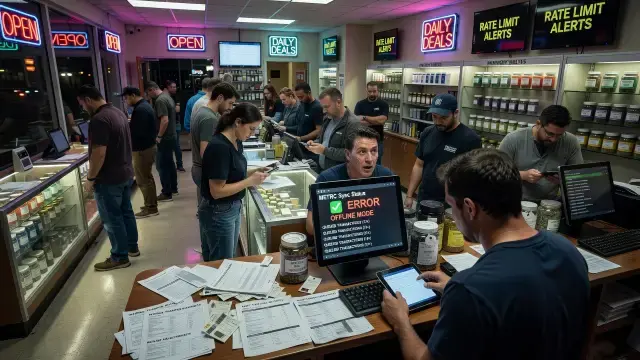

Most dispensary operators treat excess cash the same way they treat a slow-moving SKU: it just sits there. That's a mistake. Whether you're a single-location retailer building a tax reserve or a multi-state operator parking proceeds between build-outs, short-term cash doesn't have to earn nothing while it waits. The tools available - high-yield savings accounts, cash management accounts, certificates of deposit, money market funds and bond funds - all carry different risk and liquidity profiles, and for an industry already squeezed by 280E and limited banking access, choosing the right one matters more than most operators realize.
Why cannabis businesses sit on cash in the first place
Federal tax code 280E disallows standard business deductions for plant-touching companies, which means dispensary owners often need to hold larger cash reserves than a comparable retailer in another industry. Add to that the compliance costs tied to seed-to-sale tracking, METRC reporting, lab testing fees and renewal costs for state licensing, and you've got operators who routinely need liquidity on short notice. The instinct, understandably, is to keep that money in a basic business checking account where it earns close to nothing. In practice, though, that's leaving return on the table for no good reason - assuming the business banking relationship allows for alternatives, which isn't always a given in this industry.
Banking access complicates the picture
Here's the catch specific to cannabis: not every financial institution will work with plant-touching businesses, and the ones that do often charge higher account fees or limit product offerings. A high-yield savings account or cash management account that's easy for a typical small business to open may be off the table for a dispensary, depending on the bank's risk tolerance and compliance program. Operators should confirm with their current banking partner - ideally one already comfortable with cannabis compliance logs and cash-intensive retail - whether a higher-yield cash product is available before assuming it isn't. Credit unions and regional banks that specialize in cannabis banking sometimes offer these products even when larger institutions won't.
Matching the vehicle to the timeline
For reserves tied to a known, near-term obligation - an excise tax payment, a lease renewal, a planned buildout - a CD can lock in a rate for a fixed term, with the tradeoff being an early-withdrawal penalty if the cash is needed sooner than planned. For funds that need to stay liquid, such as a working capital cushion for payroll or unexpected compliance costs, a high-yield savings account or cash management account keeps money accessible while still earning some return. Money market funds and bond funds sit further out on the risk spectrum and may suit operators with longer planning horizons or treasury functions sophisticated enough to manage interest-rate exposure.
- High-yield savings accounts: liquid, FDIC-insured up to $250,000 per institution, rates tied to the federal funds rate.
- Cash management accounts: brokerage-based, often swept across partner banks to extend FDIC coverage.
- CDs: fixed-term, fixed-rate, penalty for early withdrawal.
- Money market and bond funds: higher potential yield, SIPC rather than FDIC protection, more exposure to interest-rate movement.
The operational takeaway
None of this changes the underlying reality that cannabis retail runs on thin margins after state excise tax, local taxes and 280E are factored in. But treating idle cash as a resource rather than an afterthought is a basic treasury discipline that most other regulated industries already practice. For dispensary owners and multi-state operators alike, the question isn't whether to let cash sit - it's whether the current banking relationship even allows for better options, and whether finance teams are reviewing that question on a regular basis rather than letting default settings decide for them.