Texas hemp operators spent most of this year bracing for the worst. Tuesday night changed the calculus. New leadership at the state level, including the defeat of Lt. Gov. Dan Patrick, has given the hemp industry its best political opening in years, and at least one San Antonio lawmaker now wants to push the conversation past hemp and into full cannabis legalization.
A Regulatory Whiplash Year, Finally Settling
To understand why this election matters so much to retailers, you have to understand the year they just survived. Texas hemp businesses have been operating under a patchwork of enforcement actions, court injunctions and shifting agency guidance ever since lawmakers moved to restrict THC products derived from hemp. Shelves got cleared, then restocked, then cleared again as litigation worked its way through the courts. That kind of instability is brutal for inventory planning. Retailers can't manage SKUs, set wholesale pricing or forecast tax liability when the legal status of a product category changes by the month.
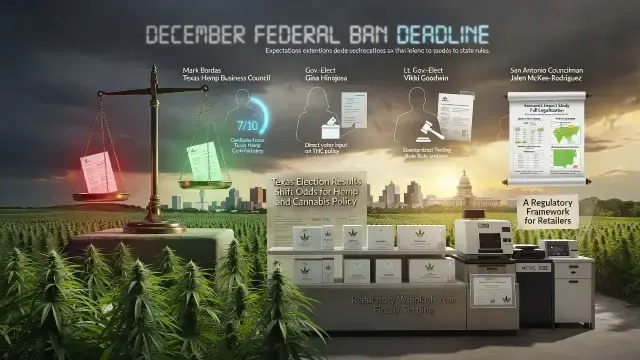
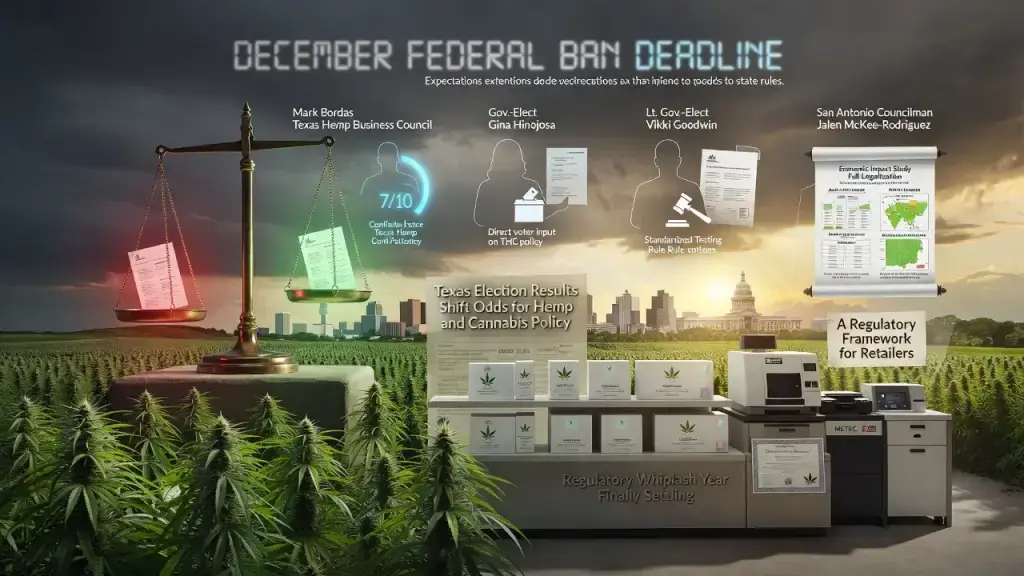
Mark Bordas of the Texas Hemp Business Council put it plainly: the industry felt like it had been "driven to the edge of the cliff." Patrick's defeat, along with the election of state leaders who've signaled openness to THC reform, has shifted the mood from defensive to cautiously optimistic. Bordas pegged his own confidence at "seven out of 10" that a fuller range of hemp-derived THC products returns to store shelves - not certainty, but a real change in posture from an industry that spent the year in survival mode.
What Changes Operationally, and What Doesn't
Here's the catch: a friendlier political climate doesn't automatically translate into settled compliance rules. Operators still need to track lab testing and certificates of analysis, maintain compliant packaging, and watch for whatever age-verification and labeling standards emerge from a new legislative session. Gov.-elect Gina Hinojosa has floated giving voters a direct say on THC policy, and Lt. Gov.-elect Vikki Goodwin's stated priorities include reversing the recent regulatory crackdown and building out standardized testing and labeling rules. For retailers, that's a mixed signal - relief on access, but likely more formal compliance infrastructure down the line, not less.
That's actually the more sustainable path. A regulated hemp market with consistent lab testing, clear potency labeling and enforced age restrictions is far easier for a retailer to build a business around than one governed by injunctions and emergency rulemaking. Investors and wholesalers have been pricing in legal risk all year; a stable framework, even a stricter one, tends to lower that risk premium over time.
San Antonio's Councilman Wants to Go Further
Separately, San Antonio Councilman Jalen McKee-Rodriguez has filed a request for the city to study the economic impact and potential opportunities tied to cannabis legalization, not just hemp. His stated goal is to build a data-backed case that legalization would benefit the city and state economically, and to make that case directly to state legislators. He noted the effort predates this week's election but said the results have added momentum and bipartisan interest.
That's a different conversation entirely from hemp reform. Marijuana legalization would mean adult-use licensing frameworks, seed-to-sale tracking systems like METRC, excise taxes, zoning fights over dispensary locations, and the federal 280E tax burden that currently squeezes plant-touching businesses in legal states. Texas isn't close to that yet. But a municipal economic-impact study is often the first procedural step toward building political cover for lawmakers who want one.
The Federal Deadline Still Looms
None of this erases the federal ban on intoxicating hemp products set to take effect in December. Bordas said he expects the Trump administration to extend that deadline and defer to states on enforcement, calling Texas rules "the rules of the game for hemp moving forward." That's a bet, not a guarantee. Operators would be wise to keep compliance logs current and watch both state and federal rulemaking closely - optimism is not the same as certainty, and in this industry, the two have rarely lined up for long.